Budget and prices
What a home gym costs per session, and when it beats a membership
Divide the kit by the sessions you will actually do. At 3 sessions a week over 5 years, an example $1,600 setup is $2.05 a session in AUD, GST included.
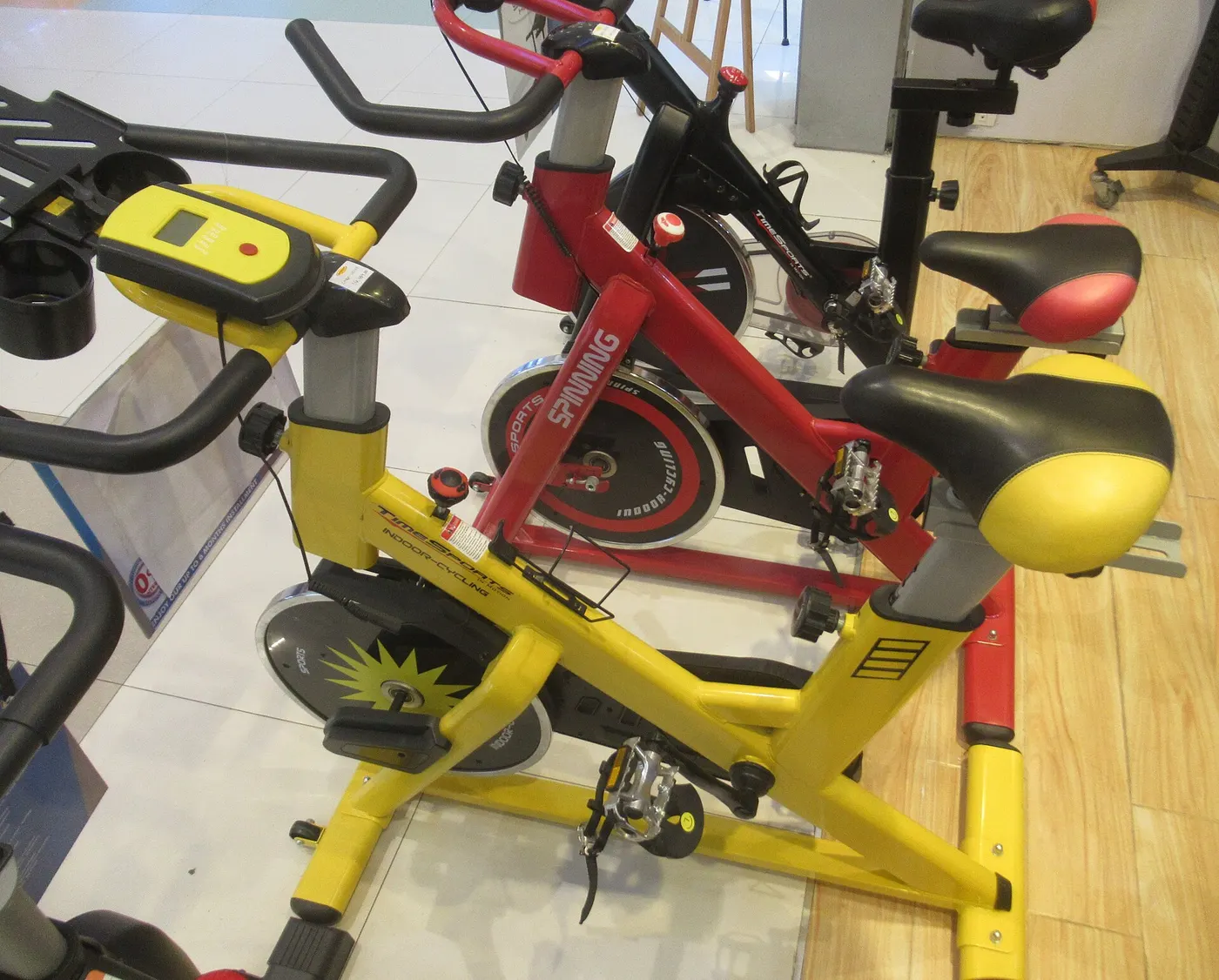
The useful number for home gym equipment is not the price. It is the price divided by the sessions you will complete on it, and that denominator is set by your week rather than by the product.
This guide does the division three ways and then compares it with a membership. Australian consumer prices are advertised GST inclusive, so every dollar figure here already includes GST. All prices are examples used to show the method; this site carries no live pricing.
Sessions, not years, are the denominator
Two sessions a week is 104 a year, three is 156 and five is 260. Over 5 years those become 520, 780 and 1,300 sessions. Dividing the kit cost by those numbers is the whole calculation, and it produces answers that are wildly different for the same equipment.
An example $1,600 setup — an adjustable dumbbell pair, a bench and a mat — is $3.08 a session at two a week, $2.05 at three a week and $1.23 at five a week. The equipment did not change. The only thing that changed is how often somebody used it.
This is why the honest first question is frequency, not budget. A $4,000 setup used five times a week costs $3.08 a session, exactly the same as a $1,600 setup used twice a week. The cost-per-use calculator on this site takes your own frequency so you can see where your household actually sits.
| Setup cost | 2 sessions a week (520) | 3 a week (780) | 5 a week (1,300) |
|---|---|---|---|
| $400 | $0.77 | $0.51 | $0.31 |
| $1,600 | $3.08 | $2.05 | $1.23 |
| $4,000 | $7.69 | $5.13 | $3.08 |
Each cell is the setup cost divided by the session count in the column heading. No resale value is subtracted and no consumables are added; both are handled below.
Where the membership comparison actually lands
Take an assumed $22 a week gym membership. Over a year that is $1,144, and at 3 sessions a week it is $7.33 a session. The same 156 sessions a year on an example $1,600 home setup cost $2.05 each in the 5 year column, so the home setup is $5.28 a session cheaper on these assumptions.
The break-even is the setup cost divided by the annual membership: $1,600 divided by $1,144 is about 1.4 years, or roughly 17 months. After that month the equipment is producing sessions at close to zero marginal cost, which is why keeping kit is worth more than buying good kit.
The comparison stops being clean at two points. A membership buys equipment you will not have at home, which for heavy barbell work or swimming is not a cost question at all. And a membership that goes unused is $1,144 a year of nothing, where unused equipment is at least resaleable.
- Count your realistic sessions a week and multiply by 52 to get sessions a year
- Multiply by the years you expect to keep the equipment to get the denominator
- Divide the all-in setup cost, including flooring and delivery, by that denominator
- Multiply your weekly membership price by 52 and divide by the same annual session count
- Divide the setup cost by the annual membership cost to get the break-even in years
The lines people leave out
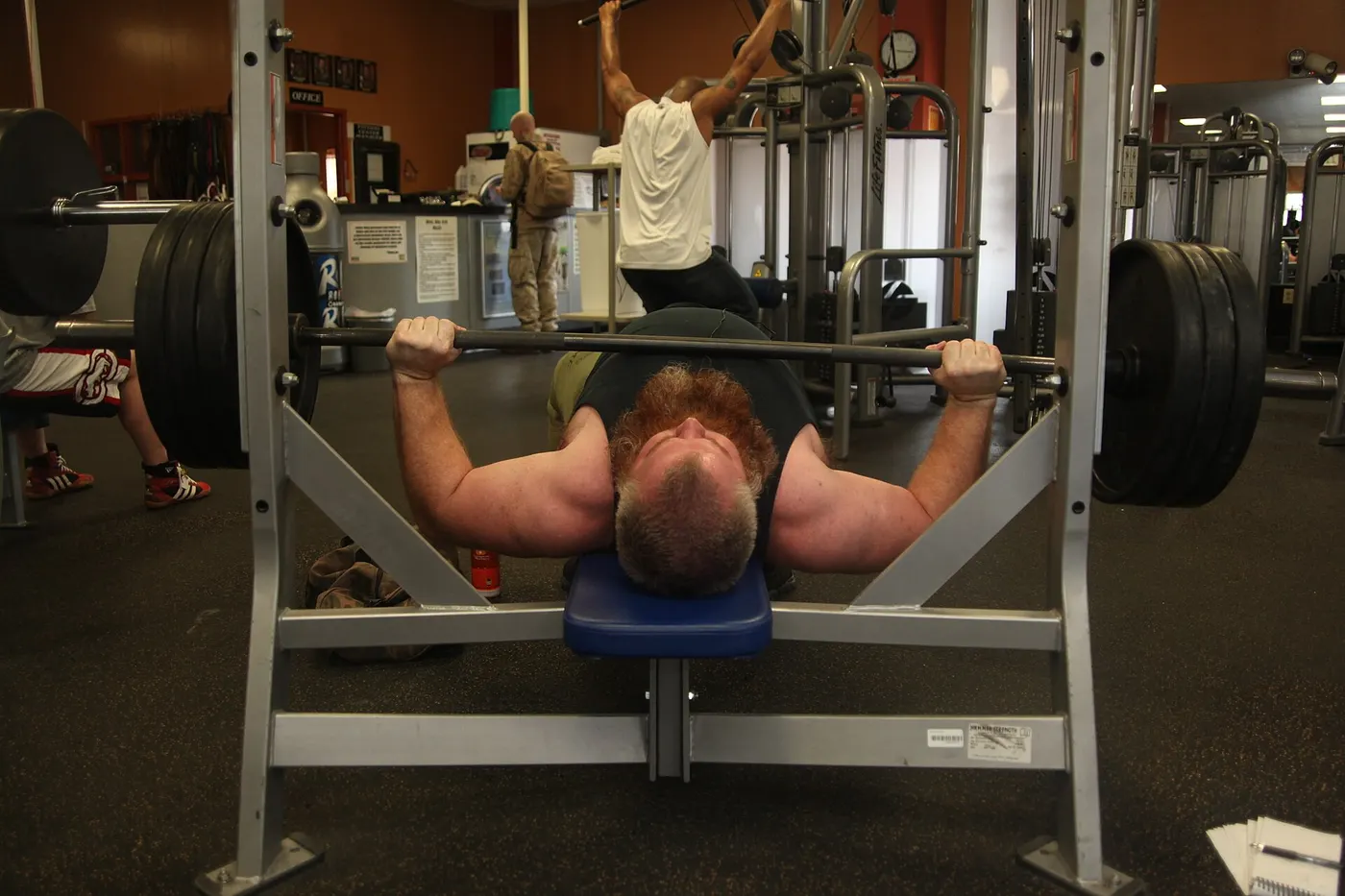
Delivery and flooring are part of the setup cost and routinely add 15 to 25% to it. An example $200 to $400 of rubber tiles for a 2 metre by 2 metre area is $0.26 to $0.51 a session at 780 sessions, which is a quarter of the $2.05 figure on its own.
Consumables are small but real: band replacement every 12 to 24 months at an example $40, cleaning supplies, and a bike or rower's wear parts. Budget an example $60 a year, which at 156 sessions is $0.38 a session, and the $2.05 becomes $2.43.
Buying from an overseas seller changes the total in a direction people underestimate. business.gov.au states that most imports attract 10% goods and services tax and that goods valued up to A$1,000 can generally be imported without a formal import declaration. On an example $900 bench press setup, the GST alone is $90, and freight on heavy steel is usually the larger of the two additions. The landed-cost calculator on this site adds both before you compare with a local price.
| Line | Amount | Per session over 780 sessions |
|---|---|---|
| Equipment | $1,600 | $2.05 |
| Rubber flooring, 2 m by 2 m | $300 | $0.38 |
| Consumables at $60 a year for 5 years | $300 | $0.38 |
| Total | $2,200 | $2.81 |
The flooring and consumable figures are mid-range examples from the ranges given in the text. $2,200 divided by 780 sessions is $2.82; the small difference against the column sum is rounding on each line.
What the wider spending figures say about timing
The Australian Bureau of Statistics monthly household spending indicator for August 2026 recorded total household spending up 6.8% on August 2025, with recreation and culture down 1.4% on the month and clothing and footwear down 1.0%. Discretionary categories were softening while the overall total rose.
The monthly CPI indicator for September 2026 put the all-groups figure up 4.3% over 12 months, with recreation and culture up 4.5%. Equipment prices are not falling in real terms, which argues against waiting for a better moment and in favour of buying less kit that gets used more.
Neither figure tells you what a specific product will cost. They tell you that the sensitivity in this purchase is on the session count, which you control, rather than on the price, which you do not.
Before you buy
- Count realistic sessions a week, then multiply by 52 and by the years you will keep the kit
- Divide the all-in cost, including delivery and flooring, by that session count
- Multiply your membership price by 52 and divide by the same annual session count to compare
- Divide setup cost by annual membership cost to find the break-even in years
- Add 10% GST and freight to any overseas quote before comparing it with a local price
- Subtract a realistic resale figure for steel, and none for consoles and upholstery
Questions readers ask
- What if I only train twice a week in winter and five times in summer?
- Average it over the year rather than over a good month. Twenty-six weeks at two sessions and twenty-six at five is 182 sessions a year, not 260. On the $1,600 example over 5 years that is 910 sessions and $1.76 each, which sits between the two columns in the table above.
- Should resale value come off the setup cost?
- Yes, and it changes the answer most for heavy steel. Cast plates and barbells hold value well; consoles and upholstery do not. If an example $1,600 setup sells for $600 after 5 years, the net is $1,000 and the figure falls from $2.05 to $1.28 a session at 780 sessions.
- Is a cheap setup false economy?
- Only if it breaks or stops the training. A $400 kit of bands, a mat and a kettlebell is $0.51 a session at 780 sessions and covers the muscle strengthening the guidelines ask for on 2 days a week. It stops being enough at the point where load progression matters, which for most people is somewhere past year one.
- How does a $4,000 setup ever make sense on these numbers?
- At five sessions a week over 5 years it is $3.08 a session, the same as a $1,600 setup used twice a week. It makes sense when the frequency is high and the alternative is a membership plus travel time. At 30 minutes of round trip per visit, 260 visits a year is 130 hours, which is the line nobody prices.
Sources
- Australian Bureau of Statistics — Monthly household spending indicator, August 2026 (total spending up 6.8% on a year earlier; recreation and culture down 1.4% on the month; clothing and footwear down 1.0%) — checked 2026-11-03
- Australian Bureau of Statistics — Monthly consumer price index indicator, September 2026 (all groups up 4.3% over 12 months; recreation and culture up 4.5%) — checked 2026-11-03
- business.gov.au — Importing and your business (10% GST on most imports; goods up to A$1,000 generally need no formal import declaration) — checked 2026-11-03
Some links on this site can earn us a commission. That does not change which product a guide recommends, and it adds nothing to your price. Advertising is not enabled on this site yet. When it is, ads will be labelled and kept visually separate from the guides.