How to choose
Choosing home gym kit you will still be using in year three
Only 22.4% of Australian adults met the physical activity guidelines in 2022. Pick equipment against the sessions you will actually do, and the floor you have.
Home gym equipment fails for one of two reasons: it does not fit the room, or it does not fit the week. The first is a measuring problem and is easy to solve. The second is the expensive one, because the kit still works perfectly while nobody uses it.
This guide takes the decision in the order that actually decides it: what the week looks like, what the floor allows, what the equipment is rated for, and what happens when something breaks. Every price is an example used to show the arithmetic; this site connects to no price feed and holds no stock.
Start from the week, not from the catalogue
The Australian Bureau of Statistics reported that in 2022 just 22.4% of adults aged 18 to 64 met the physical activity guidelines. The guidelines themselves are 150 to 300 minutes a week of moderate activity or 75 to 150 minutes of vigorous activity, with strength and toning exercises on 2 days or more a week. That is the target the equipment has to serve.
Written as sessions rather than minutes, the common shape is three to five sessions a week of 30 to 60 minutes, two of which involve resistance. A rower, a bike or a skipping rope covers the cardio half. A barbell or a pair of adjustable dumbbells covers the resistance half. Almost everything else in a catalogue is an optimisation of one of those two.
Be honest about the lower bound. If the realistic week is two sessions, buy for two sessions: the cost per session arithmetic on this site punishes an under-used $4,000 setup far harder than it punishes an over-used $400 one.
| Kit | Covers | Floor area in use | Typical sessions a week it suits |
|---|---|---|---|
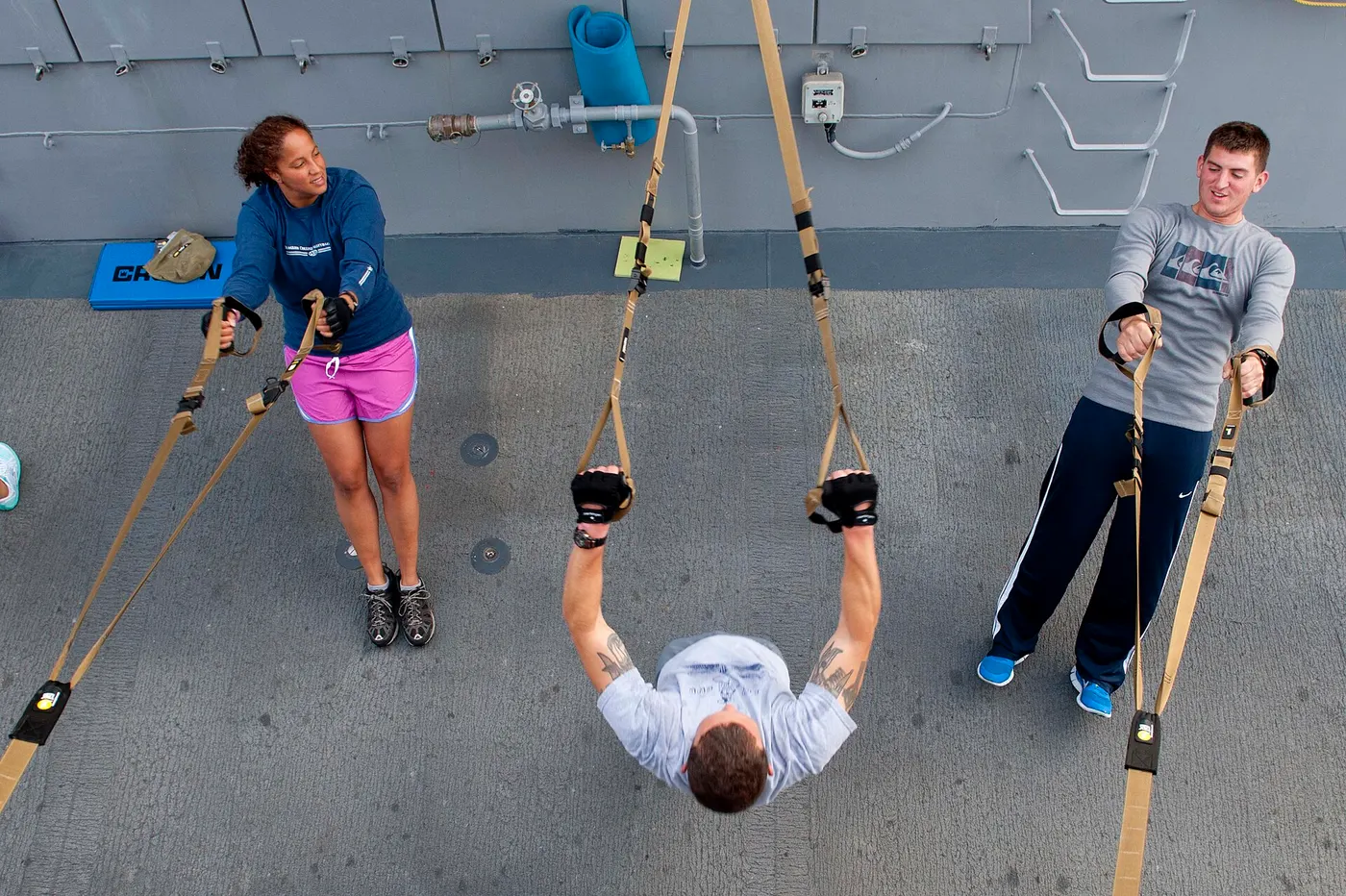
| Resistance bands and a mat | Strength on 2 days, light cardio | About 2 m2 | 2 to 4 |
| Adjustable dumbbells and a bench | Strength on 2 days, little cardio | About 3 m2 | 2 to 4 |
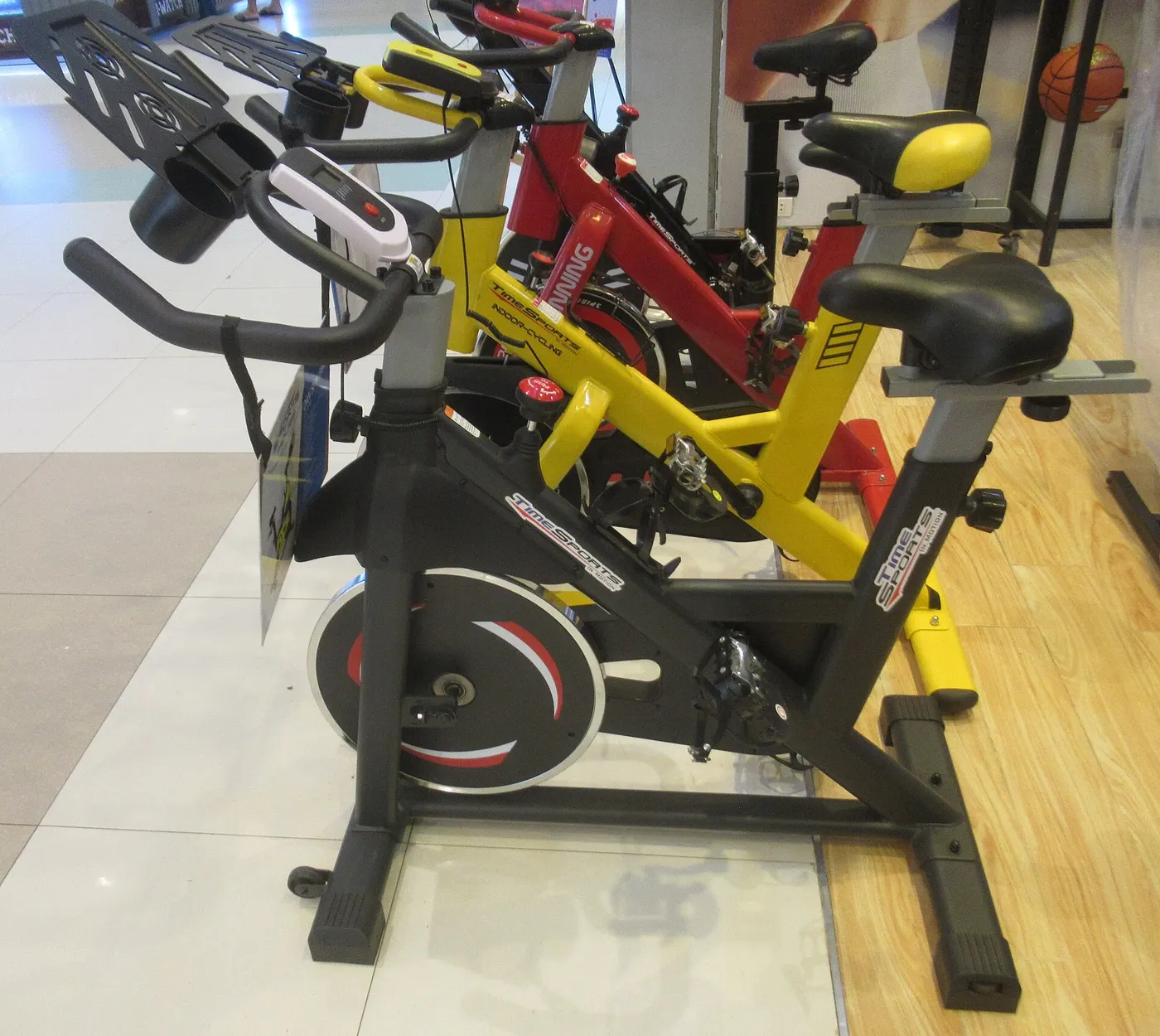
| Indoor bike or rower | 150 to 300 minutes of cardio | About 3 m2 | 3 to 5 |
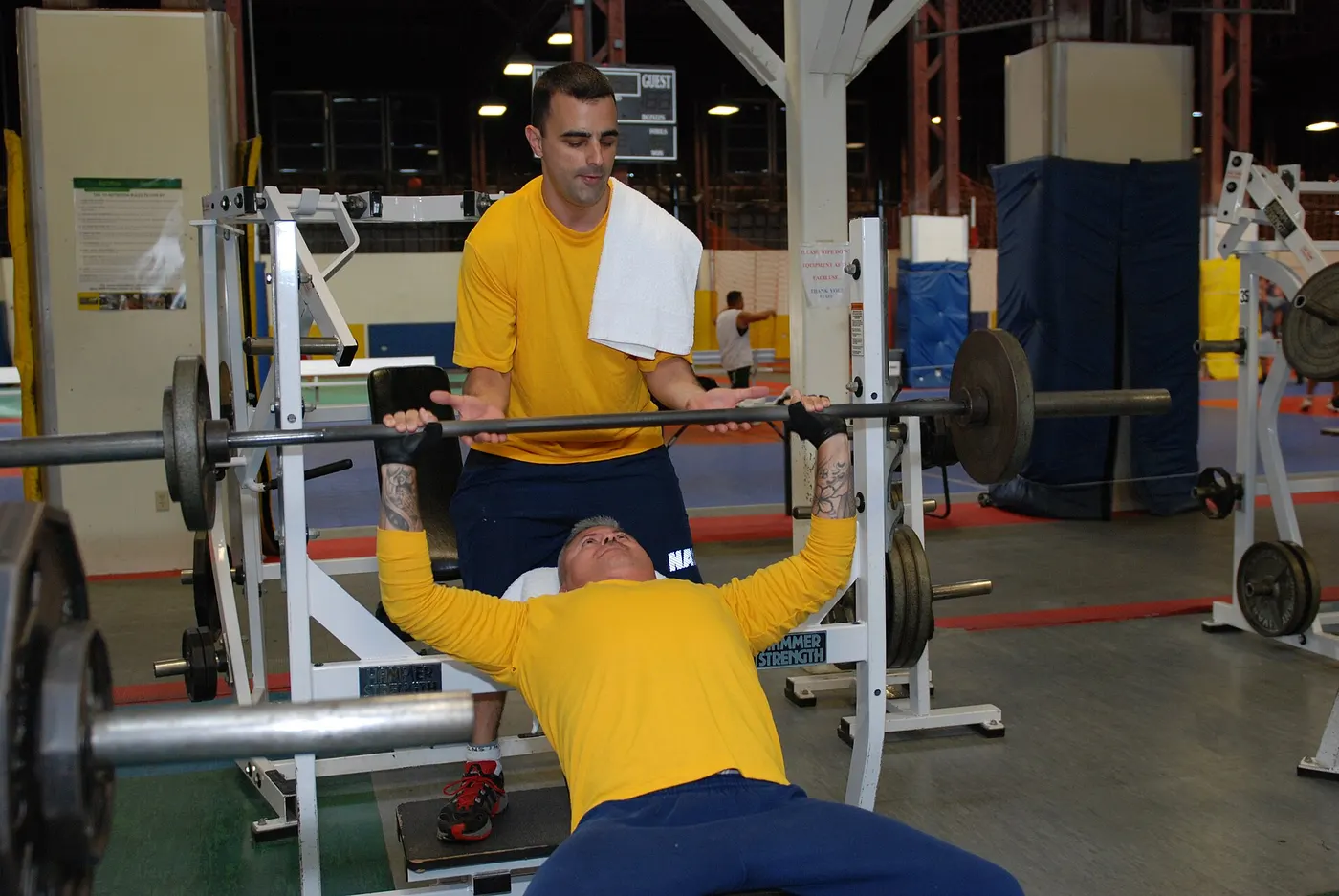
| Rack, barbell and plates | Strength on 2 days with progression | About 6 m2 | 3 to 5 |
Floor area in use is the space the equipment occupies while someone is on it, not its stored footprint. The two differ most for rowers and folding benches.
Floor area in use, not stored footprint
Manufacturers publish both numbers and buyers read the smaller one. Concept2 gives its RowErg an assembled size of 244 cm by 61 cm and separately recommends a clearance of 274 cm by 122 cm, which is the number that matters, because a rower with a wall behind the flywheel and a doorway behind the seat is not usable.
The same machine stores upright at 63.5 cm by 83.8 cm by 137.2 cm on standard legs, which is a cupboard-sized object rather than a room-sized one. The gap between 274 by 122 in use and that stored size is the whole argument for equipment that separates: a garage that is also a garage needs kit that gets out of the way.
For a rack the equivalent number is the lift, not the frame. A 1.2 metre wide rack needs a barbell length of clear space either side, and overhead pressing needs the ceiling height measured from the platform, not from the slab. Measure with a tape and stand in the space with your arms up before ordering.
- Write down the manufacturer's recommended clearance, not the assembled size
- Measure ceiling height from the top of any mat or platform you plan to add
- Check the door the equipment arrives through, in the box, before you order it
- For a garage, check the car still fits with the equipment in its stored position
- Allow a clear 1 metre on the side you mount and dismount from
Read the rating plate, because two numbers hide behind one claim
Maximum user weight is not a single standard. Concept2 publishes a maximum user weight of 227 kg as tested by Concept2, alongside an alternative European standard rating of 135 kg for the same machine. Both are true; they are answers to different test questions. A product page quoting only the larger number is quoting the manufacturer's own test, and a product page quoting only the smaller one may be using a standard test.
The same split appears in warranty terms. Concept2 lists limited 2 year and 5 year warranty cover on the RowErg, which is the usual pattern: a shorter term on moving parts and a longer one on the frame. The useful question before buying is which components sit in which term, because the moving parts are what fail.
Standards Australia develops the Australian Standards that this sort of equipment is tested against and sells them through its Standards Store under 3, 6 and 12 month licences rather than publishing them free. A seller that names a standard by number has given you something checkable; a seller that says only 'commercial grade' has not.
| Figure | Why it decides the purchase | Example from a published specification |
|---|---|---|
| Assembled size | Whether it fits the room at all | Concept2 RowErg, 244 cm by 61 cm |
| Recommended clearance | Whether it is usable where you put it | Concept2 RowErg, 274 cm by 122 cm |
| Stored size | Whether the room has another use | 63.5 cm by 83.8 cm by 137.2 cm, standard legs |
| Machine weight | Whether one person can move it | 26 kg on standard legs, 31 kg on tall legs |
| Maximum user weight | Whether the rating is a manufacturer test or a standard test | 227 kg as tested by Concept2; 135 kg to the European standard |
| Warranty split | Which parts carry the shorter term | Limited 2 year and 5 year cover |
These are figures published by one manufacturer as an illustration of what a complete specification contains. They are not a recommendation of that product, and we have not tested it.
What the law gives you when the equipment fails
A warranty is a contract term with a number of years attached. Separately, the Australian Consumer Law provides consumer guarantees that a seller cannot sign away, and the Australian Consumer Law site states that these rules protect buyers anywhere in Australia and apply uniformly across every state and territory. For gym equipment the relevant guarantee is that goods are of acceptable quality and last a reasonable time given the price and the description.
That guarantee is worth more on expensive equipment than on cheap equipment, because 'a reasonable time' scales with what you paid. A $4,000 rack that cracks a weld in year three is a different conversation from a $40 set of bands that perishes in year three.
Keep the serial number, the receipt and the assembly manual together from the day it arrives. Every claim needs all three, and the assembly manual is the one that disappears.
Before you buy
- Write down the number of sessions a week you will realistically do, and buy for that number
- Copy the manufacturer's recommended clearance, not the assembled size, onto a floor plan
- Measure ceiling height from the top of any mat or platform you plan to add
- Check the maximum user weight and note whether it is a manufacturer test or a standard test
- Read the warranty table and note which parts carry the shorter term
- Confirm spare parts are listed for the exact model before buying new or second-hand
- File the receipt, the serial number and the assembly manual together on day one
Questions readers ask
- Bands, dumbbells or a barbell for a first purchase?
- Bands if the space is under 2 square metres or the kit has to live in a cupboard. Adjustable dumbbells if there is 3 square metres and a bench will fit. A barbell and rack only once there are 6 square metres and the ceiling clears an overhead press. The limiting factor at the start is almost always the room, not the training.
- Is a treadmill or a bike the better cardio buy at home?
- A bike is quieter, lighter, needs less floor and has far fewer moving parts to service. A treadmill allows running, which is the thing a bike cannot substitute, and costs that privilege in noise, mass and belt maintenance. If the sessions are 30 to 60 minutes of steady work rather than running specifically, the bike wins on every practical measure.
- How much should I budget for flooring?
- Rubber tiles for a 2 metre by 2 metre area run to an example $200 to $400 and they protect the slab, the equipment and the people below you. On a suspended timber floor they are not optional for dropped weight. On a concrete garage slab with dumbbells only, a single 10 mm mat under the bench covers it.
- Does second-hand equipment make sense?
- For cast iron plates and steel barbells, yes: there is nothing to wear out and the price per kilogram is often half. For anything with a console, a belt, a bearing or a hydraulic cylinder, the risk is that parts are no longer sold. Search the manufacturer's spare parts page for the exact model before bidding, not after.
Sources
- Australian Bureau of Statistics — Physical activity, 2022 (22.4% of adults aged 18 to 64 met the guidelines; 150 to 300 minutes of moderate or 75 to 150 minutes of vigorous activity a week, with strength exercises on 2 days or more) — checked 2026-11-03
- Concept2 — RowErg published specifications (assembled 244 cm by 61 cm; recommended clearance 274 cm by 122 cm; 26 kg; maximum user weight 227 kg as tested by Concept2, 135 kg to the European standard; limited 2 year and 5 year warranty) — checked 2026-11-03
- Standards Australia — how Australian Standards are developed, purchased and licensed — checked 2026-11-03
- Australian Consumer Law — consumer rights and protections overview — checked 2026-11-03
Some links on this site can earn us a commission. That does not change which product a guide recommends, and it adds nothing to your price. Advertising is not enabled on this site yet. When it is, ads will be labelled and kept visually separate from the guides.